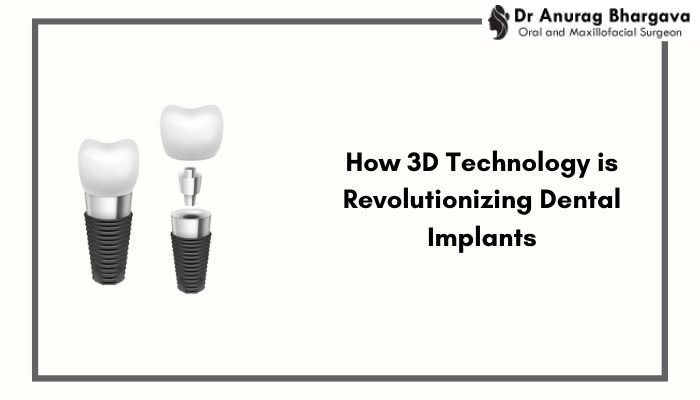
The world of dentistry has witnessed groundbreaking advancements over the years, and 3D technology is at the forefront of this revolution, especially in the field of dental implants. From precise treatment planning to faster recovery times, 3D technology is transforming the way dental implants are performed, making the process more efficient, accurate, and comfortable for patients.
What is 3D Technology in Dental Implants?
3D technology in dental implants involves the use of advanced 3D imaging, computer-aided design (CAD), and 3D printing to plan, design, and place dental implants. This technology offers a highly detailed view of the patient's oral anatomy, allowing dentists to customize the treatment plan for optimal results.
Benefits of 3D Technology in Dental Implants
1. Precision and Accuracy
3D imaging provides a detailed and accurate representation of the patient's oral structure, ensuring the exact placement of dental implants. This minimizes the risk of complications and ensures a natural-looking result.
2. Customized Treatment Plans
With 3D scanning and CAD software, dentists can create personalized treatment plans tailored to each patient's unique dental structure. This level of customization improves the success rate of dental implant procedures.
3. Minimized Surgery Time and Faster Recovery
The precision of 3D-guided surgery reduces the time required for the actual implant placement. Since the procedure is more efficient, it often leads to a less invasive surgery and faster recovery for patients.
4. Enhanced Patient Communication
3D models allow dentists to explain the procedure more clearly to patients. Seeing a visual representation of their treatment helps patients understand the process and feel more comfortable with the procedure.
How 3D Printing is Transforming Dental Implants
3D printing plays a vital role in the creation of dental implants by allowing for the fabrication of custom prosthetics, surgical guides, and temporary crowns. Key applications include:
- Surgical Guides: Custom-made surgical guides help ensure the exact placement of implants during surgery.
- Temporary Restorations: 3D printing allows for quick creation of temporary crowns, bridges, and dentures, ensuring patients have functional teeth during the healing process.
- Implant Models: Physical models created using 3D printers help dentists plan surgeries with greater accuracy.
The Role of CBCT (Cone Beam Computed Tomography) Scans
CBCT scans are a crucial part of 3D technology in dental implants. This imaging technique provides a 3D view of the patient's jawbone, teeth, and surrounding structures, which helps:
- Assess bone density and quality.
- Identify the exact placement for implants.
- Detect potential issues like nerve positioning or sinus cavities.
The Future of 3D Technology in Dental Implants
The future of dental implants is closely tied to advancements in 3D technology. Emerging trends include:
- Bioprinting: The development of biocompatible materials for printing custom implants that integrate seamlessly with natural tissues.
- Artificial Intelligence (AI) Integration: AI-powered analysis combined with 3D imaging for even more precise diagnosis and treatment planning.
- Fully Digital Workflows: From consultation to implant placement, the entire process will become digitized, improving efficiency and patient satisfaction.
3D-Guided Implant Surgery vs Traditional Implant Surgery
When it comes to dental implants, precision is everything. The difference between traditional surgery and 3D-guided implant placement can significantly affect the success, comfort, and longevity of your implants. Understanding this comparison helps patients make more informed decisions.
Traditional Implant Surgery: Based on Experience & Estimation
Traditional dental implant surgery relies heavily on the surgeon’s clinical experience and visual judgment. While skilled dentists can still achieve good results, this method has limitations:
- Implant placement is based on manual estimation using 2D X-rays, which don’t provide a complete picture of bone density, nerve pathways, or sinus location.
- Surgeons have to rely on tactile feedback to determine depth and angulation.
- The risk of unexpected anatomical challenges during surgery is higher.
- Precision varies from case to case, especially in patients with complex bone structures.
Although traditional methods are still widely practiced, they leave room for human error and uncertainty.
3D-Guided Implant Surgery: Precision at Its Best
3D-guided implant surgery uses advanced CBCT scans, digital planning software, and 3D-printed surgical guides to achieve highly accurate implant placement. This approach offers several advantages:
-
Ultra-precise implant angulation and depth
Digital imaging allows the surgeon to plan the exact angle, depth, and position of the implant before the procedure begins. This ensures that implants are placed exactly where they should be. -
Reduced risk of nerve damage or sinus perforation
3D scans provide a detailed map of sensitive structures—like nerves and sinus cavities—allowing the surgeon to avoid them with confidence. -
No intra-surgical guesswork
Because the entire surgery is pre-planned, there are far fewer surprises. The surgical guide directs implant placement with millimetre-level accuracy. -
More predictable and natural-looking outcomes
Correct alignment improves the stability, bite, and aesthetics of the final prosthetic crown or bridge.
In short, 3D-guided implant surgery transforms what used to be a largely manual procedure into a highly scientific, digitally perfected treatment.
Reduced Risk of Surgical Complications
One of the biggest advantages of using 3D technology in dental implant placement is the significant reduction in surgical risks. A detailed 3D view of the jawbone gives surgeons critical insights that simply aren’t possible with traditional 2D X-rays.
Here’s how 3D-guided planning helps:
✔️ Prevents Incorrect Implant Depth
3D imaging measures bone height and density in real time, helping surgeons choose the perfect implant length and avoid placing it too deep or too shallow.
✔️ Eliminates Implant Tilt or Misalignment
With guided surgery, the implant is placed at the ideal angle. This prevents:
- Crooked implants
- Uneven bite forces
- Difficulty placing the crown later
Proper alignment is crucial for long-term durability.
✔️ Avoids Bone Perforation
Traditional surgery may accidentally perforate thin bone areas. 3D technology identifies weak spots in advance, allowing safer and more strategic placement.
✔️ Protects Vital Structures (Nerves & Sinus Membranes)
3D scans show the exact position of:
- Inferior alveolar nerve
- Mental foramen
- Maxillary sinuses
Knowing these locations helps surgeons avoid complications like prolonged numbness, pain, or sinus issues.
Why This Matters for Patients
3D-guided implant placement not only increases precision—it boosts overall safety, reduces healing time, cuts down on complications, and improves the final aesthetic outcome. For patients seeking reliable, long-term results, choosing a dentist who uses advanced 3D technology makes all the difference.
Conclusion
3D technology has undeniably revolutionized the world of dental implants, offering enhanced precision, personalized care, and faster recovery. As the technology continues to evolve, it holds the promise of making dental implant procedures even more efficient and accessible for patients. If you’re considering dental implants, choosing a dental surgeon who uses the latest 3D technology can make a significant difference in the success and comfort of your treatment.