If you're considering dental implants, you've probably come across the term dental bone graft during your research or consultation. And naturally, one question follows:
"Do I really need a bone graft before getting a dental implant?"
The answer isn't always straightforward.
Some patients can get implants immediately, while others may require a bone graft first to build a strong foundation for the implant.
If the thought of an additional procedure sounds intimidating, don't worry. In this guide, we'll explain everything in simple terms — what a dental bone graft is, why it may be necessary, and how it affects your implant journey.
What Is a Dental Bone Graft?
Let's start with the basics.
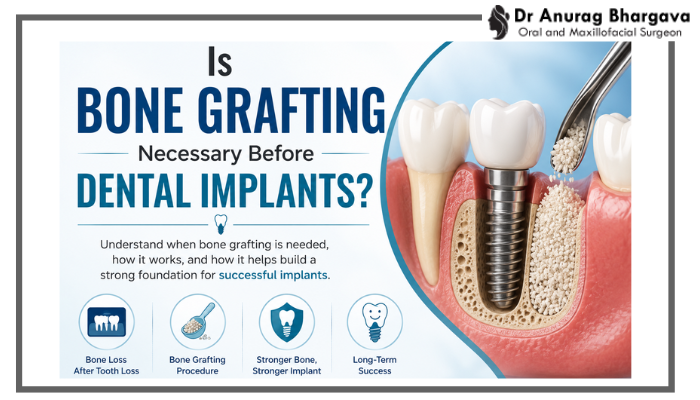
A dental bone graft is a procedure that adds or rebuilds bone in areas of the jaw where bone volume has been lost.
Think of it like repairing the foundation of a house before building on it.
Dental implants need sufficient jawbone support to remain stable and function like natural teeth. If the bone is too thin, weak, or insufficient, a bone graft for dental implant placement may be recommended.
Why Is Bone Important for Dental Implants?
Unlike dentures or bridges, dental implants are placed directly into the jawbone.
The implant acts as an artificial tooth root and depends on the surrounding bone for support.
Without adequate bone:
- The implant may not remain stable
- Implant failure risk increases
- Long-term success may be compromised
This is why dentists carefully assess bone quality before recommending implant treatment.
Why Do People Lose Jawbone?
Many patients are surprised to learn that bone loss begins soon after a tooth is lost.
Common causes include:
1. Tooth Loss
When a tooth is missing, the jawbone no longer receives stimulation from chewing.
As a result, the bone gradually shrinks.
2. Periodontal Disease
Advanced gum disease can damage both gums and supporting bone structures.
3. Trauma or Injury
Accidents and facial injuries can lead to bone loss in specific areas.
4. Long-Term Denture Use
Traditional dentures do not stimulate the jawbone, allowing bone loss to continue over time.
Is Bone Grafting Always Necessary Before Dental Implants?
No, Not everyone needs a bone graft before dental implant treatment.
If you have:
- Healthy jawbone
- Adequate bone height
- Sufficient bone width
Your implant may be placed without grafting.
However, if imaging shows significant bone loss, grafting may improve implant success and longevity.
How Does Your Dentist Determine If You Need a Bone Graft?
Before implant treatment, your dentist will evaluate:
- Jawbone density
- Bone height
- Bone width
- Location of missing tooth
- Overall oral health
This is typically done using:
- Digital X-rays
- CBCT scans
- Clinical examination
The goal is to determine whether the jaw can securely support an implant.
Bone Graft for Tooth Implant: When Is It Recommended?
A bone graft for tooth implant placement is often recommended when:
- A tooth has been missing for a long time
- Severe bone loss is present
- Bone volume is inadequate
- Implant stability may be compromised
In these situations, grafting helps create the ideal environment for implant placement.
Tooth Extraction and Bone Graft: Why Are They Often Done Together?
One of the most common questions patients ask is:
Why perform a bone graft immediately after extraction?
The answer is simple.
Bone loss begins soon after a tooth is removed.
Performing a tooth extraction and bone graft simultaneously can:
- Preserve bone volume
- Reduce future bone loss
- Improve implant readiness
- Minimize additional procedures later
This approach is often called socket preservation.
Molar Extraction With Bone Graft: Is It Common?
Yes, A molar extraction with bone graft is frequently performed because molars experience heavy chewing forces.
Preserving bone in these areas helps:
- Maintain jaw structure
- Support future implants
- Prevent significant bone shrinkage
Many dentists recommend grafting immediately after molar removal if an implant is planned later.
What Materials Are Used in Bone Grafting?
Several materials may be used during a dental bone graft procedure.
Autograft
Bone taken from your own body.
Allograft
Processed donor bone.
Xenograft
Bone derived from animal sources.
Synthetic Grafts
Biocompatible materials designed to support bone growth.
Your dentist will recommend the most suitable option based on your needs.
What Happens During a Bone Graft Procedure?
The procedure is generally straightforward.
Steps typically include:
- Local anesthesia is administered.
- The graft material is placed in the affected area.
- A protective membrane may be used.
- The site is closed and allowed to heal.
Most patients report mild discomfort rather than significant pain.
Does Bone Grafting Hurt?
This is one of the biggest concerns.
The good news is:
The procedure is performed under local anesthesia, so you won't feel pain during treatment.
Afterward, mild symptoms may include:
- Swelling
- Tenderness
- Minor discomfort
These symptoms are usually manageable with prescribed medications.
How Long Does Bone Graft Healing Take?
Healing time varies depending on:
- Size of the graft
- Location
- Patient's health
- Type of graft used
Generally:
- Initial healing: 1–2 weeks
- Bone integration: 3–6 months
Your dentist will determine when implant placement can safely proceed.
Bone Graft Before and After: What Changes Can You Expect?
Many patients search for bone graft before and after results to understand the benefits.
After successful grafting:
- Bone volume increases
- Implant support improves
- Jaw structure is preserved
- Long-term implant success rates improve
The goal isn't just replacing lost bone — it's creating a stable foundation for future dental work.
Extraction and Bone Graft: Can It Reduce Future Procedures?
In many cases, yes.
When extraction and bone graft are performed together:
- Bone preservation begins immediately
- Additional grafting may be avoided later
- Implant placement becomes more predictable
This is one reason many implant specialists recommend early intervention.
What Happens If You Skip Bone Grafting?
Not every patient who skips grafting experiences problems.
However, inadequate bone may lead to:
- Poor implant stability
- Difficulty placing implants
- Higher risk of implant complications
- Less predictable long-term outcomes
Your dentist will help determine whether grafting is truly necessary in your case.
Benefits of Bone Grafting Before Dental Implants
A bone graft for dental implant treatment offers several advantages:
✔ Improves implant stability
✔ Increases implant success rate
✔ Preserves facial structure
✔ Prevents further bone loss
✔ Creates adequate support for implants
✔ Enhances long-term treatment outcomes
Are Bone Grafts Safe?
Yes, Modern bone grafting procedures are widely used and considered safe when performed by experienced professionals.
Complications are relatively uncommon and can usually be managed effectively when patients follow post-operative instructions.
Final Thoughts
So, is bone grafting necessary before dental implants?
The answer depends on your jawbone condition.
Some patients can proceed directly with implants, while others benefit greatly from a dental bone graft to strengthen the implant site.
Remember:
A successful implant doesn't just depend on the implant itself — it depends on the foundation supporting it.
If bone loss is present, a bone graft may be one of the most important steps toward achieving a long-lasting, stable, and natural-looking smile.
Frequently Asked Questions (FAQs)
1. Is a dental bone graft always required before implants?
No. Bone grafting is only recommended when there is insufficient jawbone to securely support a dental implant.
2.What is a bone graft for tooth implant?
A bone graft for tooth implant is a procedure that rebuilds lost jawbone to create adequate support for implant placement.
3. Can tooth extraction and bone graft be done together?
Yes. Tooth extraction and bone graft procedures are often performed simultaneously to preserve bone and prepare for future implants.
4. How long does a dental bone graft take to heal?
Most bone grafts require 3–6 months for complete integration before implant placement can proceed.
5. Is a bone graft painful?
No. The procedure is performed under anesthesia. Mild swelling and soreness afterward are normal and usually manageable.
6. Why is molar extraction with bone graft common?
Molar extraction with bone graft helps preserve bone volume in areas that experience strong chewing forces and may require implants later.
7. What happens if I don't get a bone graft?
Without adequate bone support, implant placement may become difficult and long-term implant stability may be reduced.
8. Can a bone graft fail?
Bone graft failure is uncommon but can occur due to infection, poor healing, or inadequate blood supply.
9. What do bone graft before and after results show?
Bone graft before and after results typically show improved bone volume, better implant support, and preservation of jaw structure.
10. Is bone grafting safe for older adults?
Yes. Healthy older adults can safely undergo bone grafting when properly evaluated and treated by an experienced dental specialist.
Ready to Restore Your Smile?
If you're considering dental implants and wondering whether a bone graft for dental implant treatment is necessary, expert evaluation is the first step.
Consult Dr. Anurag Bhargava for a personalized assessment and advanced implant solutions designed to restore both function and confidence.
About the Author
Dr. Anurag Bhargava is a qualified cosmetic and reconstructive surgeon specializing in facial deformity correction, rhinoplasty, jaw surgery, cleft lip and palate repair, and post-traumatic facial reconstruction. Dr. Bhargava is committed to delivering safe, evidence-based, and natural-looking results for patients of all ages.
BDS, MDS (Oral & Maxillofacial Surgery), FICOI (USA), Diplomate – WCOI (Japan)