
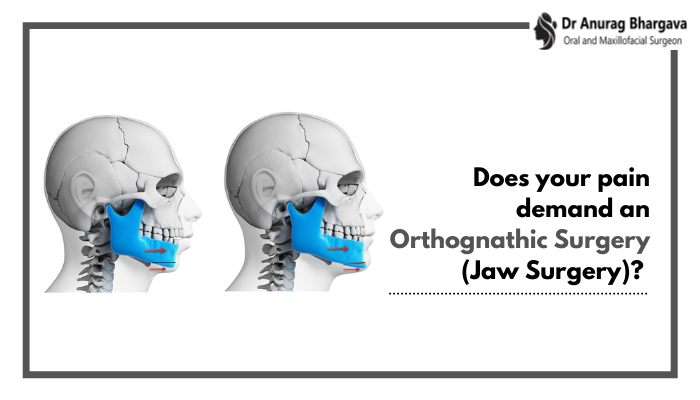
Are you facing problems in chewing or biting the food? Did facial injury happen to you? Is your jaw in defect by birth or you just got an accident resulting in a jaw fracture, severe jaw pain and headaches? Relax, pull your socks altogether to get your problems solved. Go for Orthognathic surgery or Corrective jaw surgery to get out of the clutch.
PREFACE TO ORTHOGNATHIC SURGERY-
Orthognathic surgery is the corrective jaw surgery in which a large number of minor and major skeletal and dental irregularities are widely corrected. It is a unique endeavour in facial surgery. If you have an unbalanced facial appearance from the front or side, orthognathic is the best option for you. Facial features and occlusal functions can be modified and restored significantly through this surgery. If you are planning to undergo orthognathic surgery then do not delay, Revitalize your self- being and self-confidence. Improvements in chewing, breathing and speaking are the testimonials of orthognathic surgery. Patient's appearance may be dramatically enhanced as a result of this surgery.
Orthognathic Surgery is always performed by an oral and maxillofacial surgeon. Meet our surgeon- Dr Anurag Bhargava for best orthognathic treatment in Indore. Our surgeon will help you in deciding and determining the suitable corrective jaw surgical procedure. For your knowledge, this treatment requires orthodontic before and after, which may take a couple of years. Proper medications, precaution and health care should be seriously considered.
Alarming conditions for the need of orthognathic treatment
Following are some of the conditions that may indicate the need for corrective jaw surgery:
1. Difficulty chewing or biting food
2. Difficulty swallowing
3. Chronic jaw or jaw joint (TMJ) pain and headaches
4. Excessive wear of the teeth
5. Open bite (space between the upper and lower teeth when the mouth is closed)
6. Unbalanced facial appearance from the front or side
7. Facial injury
8. Birth defects
9. Receding lower jaw and chin
10. Protruding jaw
11. Inability to make the lips meet without straining
12. Chronic mouth breathing
13. Sleep apnea (breathing problems when sleeping, including snoring)
Orthognathic surgery is complex yet worth for your makeover-
Do you know what happens in orthognathic surgery?
Orthognathic involve the movement of upper and lower jaw both. These jaws are lengthened or shortened, moved up and down in or out, this makes your bite and facial appearance pleasant and harmonious. The alignment between your jaws and teeth is vital, requisite for orthognathic comes when your jaw and teeth do not meet correctly leading to improper oral functions. With the help of jaw surgery, jaws are repositioned and aligned with the teeth, this improves the jaw joint function and chewing activity, speech delivery, breathing, sleep apnea, periodontal health and facial aesthetics.
Since now you are aware of orthognathic, plan out a careful and effective orthognathic surgery soon with our specialist Dr Anurag Bhargava. Since the procedure is complex but the change you go through orthognathic surgery is commendable and satisfying.
Aftercare of surgery-
We encourage you to start drinking and eating soft foods after surgery. After the surgery, most patients lose their weight, nothing to concern much, eat healthy food, take proper health care and try to keep your calories up during these days so that energy level do not level down.
After The surgery mouth movement especially mouth opening will be reduced and swelling may be observed try eating soft and chewy foods. Avoid eating hard and solid foods. Over the next few weeks, you should return to a normal diet, avoiding hard foods for up to six weeks whilst the jawbones heal.
Tooth brushing is very important throughout treatment but especially so after surgery. You are advised to use a soft toothbrush for the first few weeks after surgery.
Conclusion-
For all traumatic facial issues, orthognathic is a one-stop solution. Get your chewing, eating, talking, biting and speech all set in the desired way, through Orthognathic Surgery. Orthognathic completely rebuilds the foundation of your face. Dr Anurag Bhargava is always ready to address your concerns. Book an appointment with him to get rid of stress and discomfort coming from facial and dental irregularities. Further, a positive approach is extremely important both before and after jaw surgery. Various studies support the fact that positive thinking can assist the body during the process of healing. The support of your family in the days and weeks following your surgery will also aid your recovery.
Frequently Asked Questions (FAQs)
1. What is orthognathic surgery?
Orthognathic surgery, also called corrective jaw surgery, is performed to reposition the upper or lower jaw and correct bite, facial balance, and functional issues
2. Who needs jaw surgery?
Jaw surgery is usually recommended for patients with severe jaw misalignment, bite problems, difficulty chewing, facial imbalance, or functional concerns that cannot be corrected with braces alone.
3. Can braces fix jaw alignment without surgery?
Braces help align teeth, but in severe skeletal jaw discrepancies, orthognathic surgery and orthodontic treatment are often planned together for better results.
4. Will orthognathic surgery change facial appearance?
Yes, jaw surgery can improve facial harmony and proportions while also improving functional concerns like chewing and overall jaw alignment.
5. Is jaw surgery painful?
The procedure is performed under anesthesia. After surgery, temporary swelling, soreness, and mild discomfort are expected during recovery.
6. Does jaw surgery leave visible scars?
Most orthognathic surgeries are performed inside the mouth, so visible external scars are minimal or usually not noticeable.
7. How long does recovery take after orthognathic surgery?
Initial recovery begins within days, but complete healing may take around two to three months depending on the individual’s health and treatment plan.
8. What should I eat after jaw surgery?
Patients are generally advised to follow a soft, liquid, or blended diet initially to support healing and reduce strain on the jaw.
9. Can numbness happen after jaw surgery?
Temporary numbness or reduced sensation may occur because of nerve recovery after surgery, but it generally improves with time.
10. Will I need follow-up treatment after jaw surgery?
Yes, follow-up visits and orthodontic treatment may continue after surgery to improve tooth alignment and stabilize long-term results.