
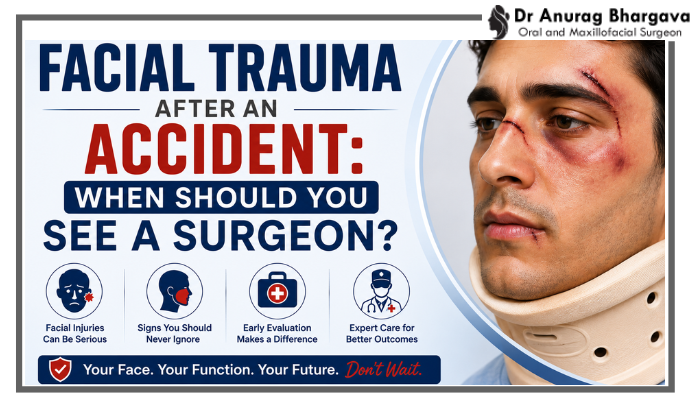
An accident can happen in seconds, but the effects of a facial injury can last much longer. Whether it is a road accident, fall, sports injury, or another type of impact, facial trauma can involve much more than a visible cut or bruise.
Sometimes the injury looks minor from the outside but affects the jaw, cheekbone, nose, eye socket, teeth, or deeper facial structures.
That is why one of the most important questions after an accident is:
“Do I really need to see a facial surgeon, or will the injury heal on its own?”
The answer depends on the type and severity of the injury.
Some injuries only require basic wound care and observation, while fractures or injuries affecting your vision, breathing, bite, or jaw movement may need specialist treatment. Facial fractures can involve the nose, cheekbones, eye sockets, upper jaw, or lower jaw, and some may not be obvious without imaging.
Let's understand the warning signs, when you should seek specialist care, and what treatment may involve.
What Is Facial Trauma?
Facial trauma refers to an injury affecting the soft tissues, teeth, jaws, or bones of the face.
It can happen because of:
- Road traffic accidents
- Falls
- Sports injuries
- Workplace accidents
- Physical assaults
- Blunt or sharp injuries
Depending on the impact, facial trauma can cause anything from cuts and bruises to complex facial fractures.
The face contains many important structures close together, including the eyes, nose, mouth, jaw, nerves, and airways. That's why even an injury that appears small deserves attention if symptoms persist or function changes.
What Are the Common Types of Facial Injuries After an Accident?
Not every facial injury is the same. Knowing what may have been affected can help you understand why a specialist assessment may be recommended.
Nose Injuries
A direct impact can cause a broken or displaced nose.
You may notice:
- Swelling
- Nosebleeding
- Pain or tenderness
- Difficulty breathing through the nose
- A visible change in the shape of the nose
A broken nose is one of the more common facial injuries after trauma.
Cheekbone Fractures
The cheekbone can fracture following a strong impact.
Symptoms may include:
- Facial swelling
- Bruising
- Pain
- Numbness around the cheek
- Changes in facial appearance
Because the cheekbone is close to the eye socket, some injuries may also affect eye movement or vision.
Jaw Fractures
An accident can jaw fractures the upper or lower jaw.
Signs can include:
- Difficulty opening the mouth
- Pain while chewing
- Loose or damaged teeth
- Difficulty speaking
- Changes in the way your teeth meet
A sudden change in your bite after an accident is particularly important and should not simply be ignored.
Eye Socket Injuries
Fractures around the eye can sometimes be harder to recognize.
Warning signs include:
- Double vision
- Blurred vision
- Difficulty moving the eye
- Swelling around the eye
- Changes in the position of the eye
Any vision change following facial trauma deserves prompt medical assessment.
Soft-Tissue Injuries
Not every injury involves a broken bone.
Cuts, lacerations, bruising, and damage to facial soft tissues are also common after accidents. Some wounds may require cleaning, closure, or specialist treatment depending on their location and severity.
When Should You See a Surgeon After Facial Trauma?
This is the most important part.
You should seek medical evaluation after significant facial trauma, particularly when there is pain, swelling, bruising, deformity, numbness, or loss of normal function.
A surgeon may be needed when there is concern about:
- A facial fracture
- Jaw displacement
- Significant facial asymmetry
- Damage around the eye
- Dental or jaw injuries
- Deep facial wounds
- Persistent numbness
- Problems with chewing or opening the mouth
An oral and maxillofacial surgeon commonly treats injuries involving the face, mouth, jaws, teeth, and facial bones.
Warning Signs That Need Urgent Attention
Some symptoms should not wait for a routine appointment.
Seek emergency medical attention if you experience:
- Difficulty breathing or swallowing
- Blurred or double vision
- Severe or increasing facial pain
- Significant bleeding
- A visibly displaced jaw or nose
- Loose or knocked-out teeth
- An open wound with exposed bone
- Clear or bloody fluid coming from the nose after significant trauma
- Severe facial swelling
- Loss of consciousness or concerning neurological symptoms
These signs can indicate a more serious injury requiring immediate evaluation.
Can a Facial Fracture Heal Without Surgery?
Yes, some can.
Not every facial fracture requires an operation. If the bones remain properly aligned and there are no significant functional problems, a specialist may recommend observation and supportive treatment instead.
However, fractures that are displaced, unstable, or affecting functions such as vision, breathing, chewing, or jaw movement may require surgical treatment.
The important thing is not to decide this yourself.
An examination and, when necessary, imaging can help determine the appropriate approach.
How Is Facial Trauma Diagnosed?
After an accident, a doctor or surgeon will usually ask about how the injury happened and what symptoms you have experienced.
The examination may include checking:
- Facial symmetry
- Swelling and tenderness
- Eye movements
- Vision-related symptoms
- Nose and airway
- Jaw movement
- Bite alignment
- Teeth
- Facial sensation
Imaging may also be recommended.
A CT scan is commonly used to evaluate facial fractures and understand their location and extent.
What Treatment Is Available for Facial Trauma?
Treatment depends entirely on the injury.
Minor Injuries
Small soft-tissue injuries or stable fractures may sometimes be managed without surgery.
Treatment can include:
- Pain management
- Ice packs
- Wound care
- Observation
- Follow-up appointments
Displaced Fractures
If facial bones have moved out of their normal position, they may need to be realigned.
This is called reduction.
Some fractures can be repositioned without an incision, while more complex injuries may require surgery.
Facial Fracture Surgery
When surgery is necessary, plates, screws, or other fixation methods may be used to stabilize the bones while they heal.
The exact approach depends on the location and severity of the fracture.
Why Is Early Assessment Important?
It's tempting to think, “The swelling will go down, so I'll wait.”
But facial trauma isn't always something you can judge simply by looking in the mirror.
A fracture may affect:
- Your bite
- Jaw movement
- Vision
- Breathing
- Facial sensation
- Facial symmetry
Early evaluation allows the injury to be properly assessed and treated when necessary.
It can also help reduce the risk of long-term functional or cosmetic problems.
What Should You Do Immediately After an Accident?
If you've suffered significant facial trauma, your first priority should be safety and emergency assessment.
While waiting for medical help, avoid trying to straighten a visibly displaced bone or force the jaw or nose back into position.
For bleeding, gentle pressure with a clean cloth may help when appropriate. Ice wrapped in a cloth can help reduce swelling, but it should not be placed directly against the skin.
If there are other serious injuries, those need to be assessed as well.
What About Facial Numbness After an Accident?
Numbness or unusual sensations can occur after facial trauma because nerves may be bruised or stretched during the injury.
In some cases, sensation gradually returns over weeks or months. Recovery depends on the extent of the nerve injury.
Persistent or worsening numbness should be discussed with your doctor or surgeon.
How Long Does Facial Trauma Take to Heal?
Recovery depends on the type of injury and the treatment required.
For some facial fractures, bone healing may take several weeks, while more complex injuries can require a longer recovery period. Swelling and bruising often improve before the underlying bone has completely healed.
Your surgeon can provide a more accurate recovery timeline after examining the injury.
Final Thoughts
Facial trauma after an accident should never be judged only by how it looks from the outside.
A small cut may be straightforward, while a seemingly simple injury could involve a fracture or damage to the jaw, eye socket, teeth, or facial nerves.
If you've experienced significant facial trauma, particularly with swelling, pain, numbness, facial deformity, vision changes, breathing difficulty, or changes in your bite, seek medical evaluation promptly.
The right specialist can determine whether you need observation, conservative treatment, or surgery.
The most important thing is simple:
Don't ignore changes in facial function after an accident. Get the injury properly assessed.
Frequently Asked Questions
1. When should I see a surgeon after facial trauma?
See a surgeon when facial trauma causes persistent pain, swelling, numbness, deformity, bite changes, jaw problems, vision symptoms, or suspected facial fractures.
2. What are the signs of a facial fracture?
Common signs include swelling, bruising, tenderness, numbness, facial asymmetry, difficulty chewing, altered bite, loose teeth, or problems moving the eyes.
3. Can facial trauma cause a jaw fracture?
Yes. Accidents can fracture the upper or lower jaw, causing pain, difficulty chewing, restricted mouth opening, loose teeth, or changes in bite alignment.
4. Do all facial fractures require surgery?
No. Some stable fractures heal without surgery, while displaced or complex fractures may require realignment and fixation with plates, screws, or wires.
5. Can facial trauma affect eyesight?
Yes. Injuries involving the eye socket can cause blurred or double vision, eye-movement problems, or changes in eye position and require prompt assessment.
6. Why does my face feel numb after an accident?
Facial numbness can occur when nerves are bruised or stretched during trauma. Sensation may gradually return, depending on the severity of nerve involvement.
7. How are facial fractures diagnosed?
Doctors examine facial structures, jaw movement, bite, eyes, and sensation, and may use CT scans or other imaging to identify facial fractures.
8. Can a broken facial bone heal naturally?
Yes, some well-aligned facial fractures can heal without surgery. However, displaced fractures may require treatment to restore proper position and function.
9. What should I do immediately after facial trauma?
Seek medical evaluation after significant trauma, control bleeding safely, avoid manipulating injured bones, and use wrapped ice to help reduce swelling when appropriate.
10. Which specialist treats facial trauma?
Oral and maxillofacial surgeons commonly manage facial injuries involving the facial bones, jaws, mouth, teeth, and related structures.
About the Author
Dr. Anurag Bhargava is a qualified cosmetic and reconstructive surgeon specializing in facial deformity correction, rhinoplasty, jaw surgery, cleft lip and palate repair, and post-traumatic facial reconstruction. Dr. Bhargava is committed to delivering safe, evidence-based, and natural-looking results for patients of all ages.
BDS, MDS (Oral & Maxillofacial Surgery), FICOI (USA), Diplomate – WCOI (Japan)