
Jaw pain can make even simple everyday activities uncomfortable. Eating your favourite food, speaking for long periods, yawning, or opening your mouth wide may become difficult when something is wrong with your temporomandibular joint (TMJ). For some people, the discomfort comes and goes, while others experience persistent pain that affects their quality of life.
If you have been researching TMJ treatment, you may have come across two procedures: TMJ arthroscopy and TMJ replacement. Although both are used to treat certain temporomandibular joint disorders, they are very different procedures and are recommended for different conditions.
So, which one is better? The answer depends on what is causing your jaw problem, how severely the joint is affected, and whether other treatments have provided relief.
Let's understand the differences between TMJ arthroscopy and TMJ replacement, including their procedures, benefits, recovery, risks, and frequently asked questions.
What Is the Temporomandibular Joint (TMJ)?
The temporomandibular joint connects your lower jawbone to your skull. You have one joint on each side of your face, just in front of your ears. These joints allow you to open and close your mouth, chew, speak, and move your jaw from side to side.
A small cartilage disc sits between the bones and helps the joint move smoothly. Muscles, ligaments, and surrounding tissues also play an important role in normal jaw movement.
When the joint or surrounding structures develop a problem, you may experience symptoms such as:
- Pain near the jaw joint or in front of the ears
- Clicking, popping, or grinding sounds
- Difficulty opening your mouth fully
- Jaw locking in an open or closed position
- Pain while chewing
- Jaw stiffness or restricted movement
- Changes in the way your teeth fit together
These symptoms can have different causes. A clicking sound alone does not necessarily mean you need surgery. Proper diagnosis is essential before deciding on treatment.
What Is TMJ Arthroscopy?
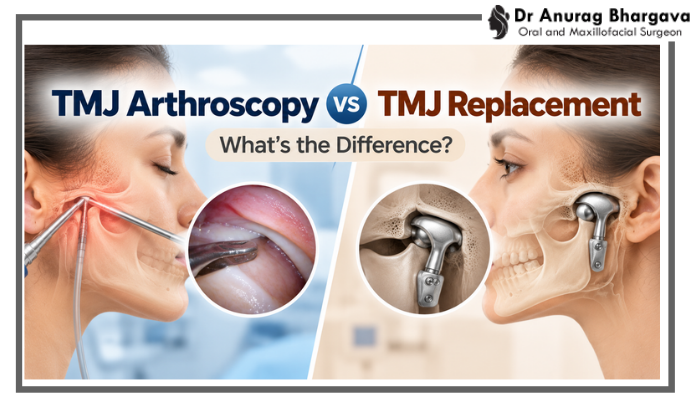
TMJ arthroscopy is a minimally invasive surgical procedure used to examine and treat certain problems inside the jaw joint.
During the procedure, a surgeon inserts a thin instrument called an arthroscope through a small incision near the joint. The instrument has a camera that allows the surgeon to view the joint's internal structures.
Small surgical instruments may also be introduced to perform specific treatments, depending on the condition being treated.
For example, arthroscopy may be used to wash out the joint, remove inflammatory debris, release certain adhesions, or address selected internal joint problems.
When Is TMJ Arthroscopy Recommended?
TMJ arthroscopy may be considered when a patient experiences persistent joint pain or restricted jaw movement that has not improved sufficiently with appropriate non-surgical treatment.
Possible reasons for considering this procedure include:
- Persistent pain associated with an internal TMJ disorder
- Restricted mouth opening
- Certain types of disc displacement
- Adhesions that limit joint movement
- Inflammatory changes within the joint
- Selected joint problems that have not responded to conservative treatment
However, TMJ arthroscopy is not appropriate for every jaw disorder. A specialist needs to establish whether the symptoms are caused by a problem that this procedure can address.
What Are the Benefits of TMJ Arthroscopy?
One of the main advantages of TMJ arthroscopy is that it uses small incisions rather than the larger surgical exposure often required for open joint surgery.
Depending on the condition being treated, potential benefits may include:
- Less disruption to surrounding tissues
- Improved jaw movement
- Reduced joint pain
- A shorter recovery than more extensive surgery
- Preservation of the natural joint
However, outcomes vary from patient to patient. Arthroscopy cannot correct every structural problem, and some patients may continue to experience symptoms or require further treatment.
What Is TMJ Replacement?
TMJ replacement is a more extensive operation in which damaged joint components are replaced with an artificial joint system.
It is generally considered for severe joint disease or damage when the natural joint can no longer function adequately and other suitable treatments have failed or are unlikely to provide sufficient benefit.
Depending on the patient's condition, replacement may involve one joint or both joints.
When Is TMJ Replacement Recommended?
TMJ replacement is usually reserved for carefully selected patients with significant joint damage or dysfunction.
Possible reasons include:
- Severe degenerative joint disease
- Advanced joint damage following trauma
- Major joint deformity
- Certain inflammatory diseases that have severely damaged the joint
- Ankylosis, which can severely restrict jaw movement
- Persistent symptoms following previous treatments or surgeries
- Significant loss of joint structure or function
The decision is not based on pain alone. The specialist must assess the extent of structural damage, understand the underlying condition, and determine whether joint replacement is likely to improve function and quality of life.
How Does TMJ Replacement Work?
The procedure involves addressing damaged joint structures and placing an artificial joint system designed for the patient's anatomy and treatment needs.
The operation is performed under general anaesthesia. The exact surgical technique depends on the type of replacement, the extent of damage, and whether one or both joints are involved.
Because TMJ replacement is a major operation, careful planning is essential. Imaging, medical assessment, and a detailed discussion of the expected benefits and risks are important parts of preparation.
What Are the Potential Benefits of TMJ Replacement?
For appropriately selected patients with severe joint damage, TMJ replacement may help reduce pain, improve jaw function, and make everyday activities such as eating and speaking easier.
It can also restore joint structure when the natural joint has been severely damaged.
However, replacement does not guarantee complete pain relief or normal jaw movement. Outcomes depend on several factors, including the underlying condition, previous treatments, muscle function, and rehabilitation.
TMJ Arthroscopy vs TMJ Replacement: Key Differences
Although both procedures treat certain temporomandibular joint disorders, their purpose, complexity, and suitability differ significantly.
| Feature |
TMJ Arthroscopy |
TMJ Replacement |
| Main purpose |
Treat selected problems inside the existing joint |
Replace a severely damaged joint |
| Procedure type |
Minimally invasive surgery |
Major reconstructive surgery |
| Surgical access |
Small incisions near the joint |
Larger surgical incisions |
| Natural joint |
Preserved |
Damaged joint components are replaced |
| Typical use |
Selected internal joint disorders and restricted movement |
Severe joint damage or end-stage disease |
| Recovery |
Generally less extensive, depending on treatment |
Usually longer and more involved |
| Artificial joint |
Not usually required |
Prosthetic joint components are used |
| Rehabilitation |
May include jaw exercises and physiotherapy |
Often involves structured rehabilitation and jaw exercises |
The main distinction is that TMJ arthroscopy attempts to treat a problem while preserving the natural joint, whereas TMJ replacement is considered when the damage is severe enough that replacing the joint may offer a better option.
Which Procedure Is Better for TMJ Disorders?
There is no universal winner in the comparison of TMJ arthroscopy vs TMJ replacement. The better procedure is the one that addresses the actual cause of the patient's symptoms without exposing them to unnecessary treatment.
When TMJ Arthroscopy May Be Suitable
Imagine someone who experiences persistent jaw pain and difficulty opening their mouth because of an internal joint problem. The joint may have restricted movement or adhesions, but its overall structure may still be suitable for preservation.
After appropriate non-surgical treatments have been considered, a specialist may recommend arthroscopy to wash the joint or release adhesions.
In this situation, replacing the entire joint may be unnecessarily extensive if the problem can be managed while preserving the natural joint.
When TMJ Replacement May Be Necessary
Now consider someone whose joint has suffered extensive damage from severe arthritis, major facial trauma, ankylosis, or previous unsuccessful procedures.
If the joint's structure has deteriorated significantly and other suitable treatments are unlikely to restore adequate function, TMJ replacement may be considered.
An artificial joint can restore a functional joint structure, but the procedure requires careful assessment, rehabilitation, and long-term follow-up.
Should You Try Non-Surgical TMJ Treatment First?
In many cases, yes.
Not every person with TMJ pain needs surgery. Clicking sounds, jaw tenderness, headaches, and restricted movement can have different causes, including problems involving the jaw muscles rather than the joint itself.
Depending on the diagnosis, initial management may include:
- Temporarily choosing softer foods
- Avoiding excessive chewing and very wide mouth opening
- Applying warm or cold compresses as advised
- Jaw exercises or physiotherapy under professional guidance
- Appropriate pain-relief medication when recommended
- A dental splint in selected cases
- Addressing clenching, grinding, or other contributing habits
If these measures do not provide sufficient relief, further evaluation may be necessary. Depending on the findings, a specialist may discuss arthrocentesis, arthroscopy, open joint surgery, or joint replacement.
Treatment should be guided by a clear diagnosis rather than pain intensity alone.
What Is Recovery Like After TMJ Arthroscopy?
Recovery after TMJ arthroscopy depends on what was done during the procedure and how the patient responds.
Because arthroscopy uses small incisions, recovery is generally less extensive than recovery from total joint replacement. However, it is still a surgical procedure, and temporary discomfort, swelling, or stiffness may occur.
Your surgeon may recommend a soft diet for a period, appropriate pain management, and specific jaw movements or physiotherapy exercises.
Follow-up appointments help assess whether mouth opening, pain, and jaw function are improving.
It is important not to force your jaw open or start strenuous exercises without guidance. Recovery instructions should be tailored to the exact procedure performed.
What Is Recovery Like After TMJ Replacement?
Recovery after TMJ replacement is usually more involved because the operation replaces damaged joint components.
Patients generally need hospital care immediately after surgery, followed by a period of healing and rehabilitation. Temporary swelling, discomfort, stiffness, and changes in the bite may occur.
Your surgeon may recommend a soft diet and a structured jaw-movement programme. Physiotherapy can help maintain movement and support functional recovery, although the specific programme varies between patients.
Recovery may take weeks to months, and progress is not always linear. Regular follow-up is important to monitor healing, jaw function, the artificial joint, and possible complications.
What Are the Risks of Each Procedure?
Both procedures have potential risks, and these should be discussed before making a decision.
Risks of TMJ Arthroscopy
Possible complications include bleeding, infection, swelling, temporary changes in sensation or facial nerve function, and persistent symptoms. Occasionally, additional treatment may be required.
The risk depends on the patient's condition, the procedure performed, and the surgeon's assessment.
Risks of TMJ Replacement
TMJ replacement involves the risks of major surgery, including infection, bleeding, nerve injury, persistent pain, limited movement, problems with the prosthetic components, and the possibility of further surgery.
An artificial joint may improve function, but it cannot necessarily reproduce every movement of a natural joint. Long-term monitoring is important.
How Do You Choose the Right TMJ Specialist?
Choosing the right specialist is an important part of treatment.
Look for a qualified oral and maxillofacial surgeon with relevant experience in TMJ disorders and the specific procedure being considered. During your consultation, ask the surgeon to explain the diagnosis, available alternatives, likely benefits, possible complications, and expected recovery.
You may also want to ask:
- What is causing my TMJ symptoms?
- Is my joint structurally damaged?
- Have appropriate non-surgical treatments been considered?
- Why are you recommending arthroscopy or replacement?
- What results are realistic in my situation?
- Will I need physiotherapy or long-term follow-up?
- What happens if the procedure does not relieve my symptoms?
A clear explanation of these points can help you make an informed decision.
Final Thoughts
TMJ arthroscopy and TMJ replacement serve different purposes. Arthroscopy is a minimally invasive option for selected problems within the joint, while replacement is generally reserved for severe joint damage when other suitable treatments are unlikely to restore adequate function.
If you are experiencing persistent jaw pain, locking, or difficulty opening your mouth, start with a thorough assessment rather than assuming you need surgery. A qualified specialist can identify the underlying problem and explain which treatment options are appropriate for your condition.
The goal is not simply to choose the more advanced procedure. It is to find the treatment that offers a reasonable chance of improving your pain, movement, and quality of life while avoiding unnecessary intervention.
Frequently Asked Questions
1. What is the main difference between TMJ arthroscopy and TMJ replacement?
TMJ arthroscopy uses small incisions and a camera to treat selected problems inside the natural joint. TMJ replacement involves replacing severely damaged joint components with an artificial joint.
2. Is TMJ arthroscopy better than TMJ replacement?
Neither procedure is universally better. Arthroscopy may suit selected internal joint problems, while replacement may be appropriate for severe structural damage. The choice depends on the diagnosis and the patient's individual condition.
3. When is TMJ replacement necessary?
TMJ replacement may be considered for severe joint damage caused by advanced arthritis, trauma, ankylosis, certain deformities, or unsuccessful previous treatments when other suitable options are unlikely to restore adequate function.
4. Is TMJ arthroscopy a major surgery?
TMJ arthroscopy is generally less invasive than open joint surgery or total TMJ replacement. However, it still involves surgery and anaesthesia, and its risks and recovery requirements depend on the procedure performed.
5. Can TMJ arthroscopy prevent the need for joint replacement?
It may help some patients avoid more extensive surgery, but this is not guaranteed. Arthroscopy cannot reverse every form of joint damage, and some patients may eventually need additional treatment.
6. How long does recovery take after TMJ arthroscopy?
Recovery varies according to the type of arthroscopy and the patient's condition. Some people resume many daily activities relatively quickly, but stiffness, discomfort, and rehabilitation needs may continue for longer. Follow your surgeon's instructions.
7. How long does recovery take after TMJ replacement?
Recovery generally takes longer than after arthroscopy and may continue over several weeks or months. Healing, jaw exercises, dietary adjustments, and regular follow-up all contribute to the recovery process.
8. Can TMJ replacement completely eliminate jaw pain?
No. TMJ replacement aims to reduce pain and improve function, but complete pain relief cannot be guaranteed. Pain may persist because of muscle problems, nerve-related factors, or other conditions.
9. Can TMJ disorders be treated without surgery?
Yes. Many TMJ disorders can initially be managed with conservative approaches such as activity modification, appropriate medication, physiotherapy, or selected dental splints. Surgery is considered according to the underlying diagnosis and response to treatment.
10. Which doctor should I consult for TMJ arthroscopy or TMJ replacement?
Consult a qualified oral and maxillofacial surgeon with experience in temporomandibular joint disorders. The specialist can assess your joint, review appropriate imaging, and explain the treatment options suited to your condition.
About the Author
Dr. Anurag Bhargava is a qualified cosmetic and reconstructive surgeon specializing in facial deformity correction, rhinoplasty, jaw surgery, cleft lip and palate repair, and post-traumatic facial reconstruction. Dr. Bhargava is committed to delivering safe, evidence-based, and natural-looking results for patients of all ages.
BDS, MDS (Oral & Maxillofacial Surgery), FICOI (USA), Diplomate – WCOI (Japan)