Have you ever wondered why some people need braces while others are advised to undergo jaw surgery to correct their bite or facial alignment? Both treatments are commonly associated with improving the way your teeth fit together, but they work in very different ways.
If you have crooked teeth, an overbite, an underbite, a misaligned jaw, or difficulty chewing, you may have come across two treatment options: orthodontic braces and orthognathic surgery. At first, they might seem similar because both can improve your bite and smile. However, the main difference lies in what they actually correct.
Braces focus on moving teeth into better positions, whereas orthognathic surgery focuses on correcting the position of the upper jaw, lower jaw, or both. In some cases, a person may need only braces. In others, braces alone may not be enough to address the underlying problem, and jaw surgery may be recommended.
Understanding the difference between orthognathic surgery and braces can help you have a more informed conversation with your orthodontist or oral and maxillofacial surgeon. Let's look at how these treatments work, when each one may be needed, and whether they can be used together.
What Is Orthognathic Surgery?
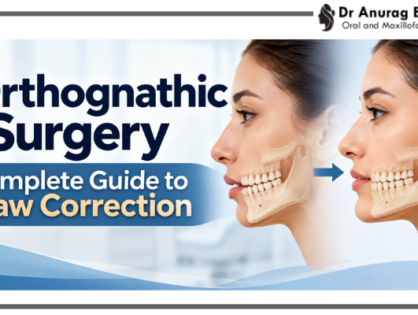
Orthognathic surgery, also known as corrective jaw surgery, is a procedure used to correct problems related to the position, shape, or alignment of the jaws.
The word may sound complicated, but the idea is straightforward. Sometimes, the upper or lower jaw develops in a way that causes the jaws not to meet properly. This can affect more than the appearance of your smile. Depending on the individual condition, it may also make biting, chewing, speaking, or closing the mouth difficult.
For example, someone may have a lower jaw that sits too far forward, creating an underbite. Another person may have a lower jaw positioned too far back, resulting in an overbite. There are also cases where the upper and lower jaws are uneven or asymmetrical.
In such situations, simply moving the teeth may not solve the underlying skeletal problem. Orthognathic surgery helps address the position of the jawbones so that the upper and lower teeth can come together more appropriately.
The procedure is planned according to the patient's jaw structure, bite, facial proportions, and treatment requirements. Depending on the condition, surgery may involve the upper jaw, lower jaw, or both.
What Are Braces?
Braces are orthodontic appliances used to gradually move teeth into better positions. They are commonly recommended for people with crooked, crowded, spaced, or misaligned teeth.
You may also hear them called orthodontic braces or mouth braces. They work by applying controlled pressure to the teeth over time. As treatment progresses, the teeth gradually move towards their planned positions.
Braces can help correct several dental alignment problems, including:
- Crooked or rotated teeth
- Crowded teeth
- Gaps between teeth
- Certain types of overbite and underbite
- Crossbite
- Uneven spacing and dental alignment
The important thing to understand is that braces primarily move teeth. They can improve the way your teeth meet and contribute to a more balanced smile, but they do not reposition a significantly misaligned jawbone in the same way that orthognathic surgery does.
This distinction is especially important when a person's bite problem is caused by the underlying jaw structure rather than the position of the teeth alone.
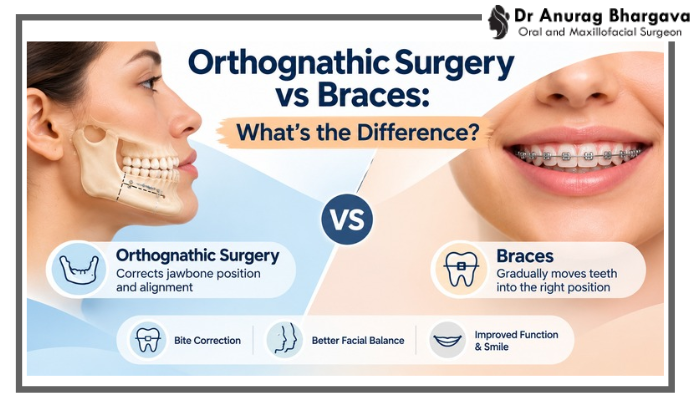
Orthognathic Surgery vs Braces: The Main Difference
Although both treatments can improve bite alignment, they are designed to solve different problems.
| Comparison |
Orthognathic Surgery |
Braces |
| Main purpose |
Corrects jawbone position and alignment |
Corrects tooth position and alignment |
| Treatment approach |
Surgical correction of the jaw |
Gradual movement of teeth |
| Commonly considered for |
Significant jaw discrepancies and skeletal bite problems |
Crooked, crowded, spaced, or misaligned teeth |
| Changes jaw position |
Yes, through surgery |
No significant surgical repositioning of the jawbones |
| Treatment planning |
Requires surgical and orthodontic assessment |
Planned by an orthodontist |
| Can they be combined? |
Yes, often combined with braces |
May be used before and after jaw surgery |
The simplest way to remember the difference is this: braces correct the position of your teeth, while orthognathic surgery corrects the position of your jawbones.
However, the two treatments are not always alternatives. Some patients need both to achieve a stable and functional bite.
When Are Braces Enough to Correct a Bite?
Not every person with an overbite, underbite, or crooked smile needs jaw surgery. In many situations, orthodontic treatment alone can provide the correction needed.
Braces may be sufficient when the problem is mainly related to tooth positioning rather than a major difference in the size or position of the jawbones.
For instance, imagine someone whose teeth are crowded because there is not enough space in the dental arch. Their jawbones may be appropriately positioned, but individual teeth are not aligned properly. In this situation, orthodontic braces may help gradually arrange the teeth.
Similarly, some dental gaps, rotated teeth, and certain bite irregularities can be treated through orthodontic methods.
The important factor is identifying where the problem originates. A bite that looks similar from the outside may have a completely different cause in another person.
An orthodontist can evaluate the teeth and bite to determine whether braces alone are likely to achieve the desired result.
When Is Orthognathic Surgery Needed Instead of Braces?
There are situations where the position of the jawbones is the main reason behind a person's bite problem. In these cases, braces may improve the position of the teeth but may not fully correct the underlying jaw discrepancy.
Orthognathic surgery may be considered when a person has:
1. Severe underbite
An underbite occurs when the lower teeth extend beyond the upper teeth. If this happens because the lower jaw is positioned too far forward or the upper jaw is underdeveloped, jaw correction may be considered.
2. Significant overbite
A noticeable overbite can sometimes be related to the position of the teeth, but it may also be caused by a difference in jaw growth. If the underlying problem is skeletal, braces alone may not provide the required correction.
3. Open bite
An open bite occurs when the upper and lower front teeth do not meet when the mouth is closed. Depending on its cause and severity, treatment may involve orthodontics, jaw surgery, or a combination of both.
4. Facial asymmetry
If one side of the jaw develops differently from the other, it can create an uneven facial appearance. When the asymmetry is related to the jawbones, orthognathic surgery may help improve the underlying alignment.
5. Difficulty chewing or biting
Some people find it difficult to bite into food or chew properly because their upper and lower jaws do not meet correctly. When this problem comes from jaw positioning, corrective jaw surgery may be considered.
6. Speech or functional difficulties
Significant jaw discrepancies can sometimes affect speech and other everyday functions. A specialist assessment can help determine whether the problem is related to dental alignment or jaw structure.
The decision to recommend surgery is not based on appearance alone. The specialist considers the bite, jaw relationship, functional difficulties, and overall treatment goals.
Can Braces and Orthognathic Surgery Be Used Together?
Yes! In fact, many patients who undergo orthognathic surgery also need orthodontic braces as part of their treatment.
This is something that often surprises people. They assume that if jaw surgery is required, there is no need for braces. However, both treatments have different roles, and combining them can help achieve a more balanced result.
Think of it this way: surgery corrects the position of the jawbones, while braces help arrange the teeth so that they fit together properly after the jaw has been repositioned.
A combined treatment plan generally involves three stages.
1. Braces Before Surgery
Before surgery, orthodontic braces are often used to move the teeth into positions that will allow them to fit together correctly once the jaws are repositioned.
During this stage, patients may notice that their bite looks different or even feels less comfortable temporarily. This can be part of preparing the teeth for the planned jaw correction.
2. Orthognathic Surgery
Once the orthodontist and surgeon consider the teeth ready for surgery, the corrective procedure is performed.
Depending on the patient's condition, the surgeon may reposition the upper jaw, lower jaw, or both. The purpose is to correct the underlying skeletal alignment and establish a better relationship between the jaws.
3. Braces After Surgery
Braces usually remain in place after surgery. The orthodontist continues making adjustments to fine-tune the bite and ensure that the teeth settle into their intended positions.
This final stage is important because successful jaw repositioning and proper tooth alignment need to work together.
The overall treatment is planned jointly by the orthodontist and oral and maxillofacial surgeon.
What Happens During Orthognathic Surgery?
If you have been advised to consider jaw surgery, you may naturally want to know what happens during the procedure.
Orthognathic surgery is performed under general anaesthesia, meaning the patient is asleep during the operation.
The exact surgical approach depends on which jaw needs correction and the nature of the alignment problem.
Generally, the surgeon makes incisions to access the jawbone, carefully repositions the required section of bone, and secures it in the planned position using small plates and screws.
The procedure is planned according to the patient's facial structure, dental alignment, and functional requirements.
It is important to remember that orthognathic surgery is not simply a cosmetic procedure. Its main purpose is to correct the relationship between the jaws and improve how the teeth and jaws function together. Changes in facial appearance may also occur because the position of the jawbones influences the overall facial profile.
Is Recovery Different for Braces and Jaw Surgery?
Yes, the recovery experience is quite different.
With braces, there is usually no surgical recovery period. Patients may experience some soreness or pressure after braces are fitted or adjusted, but they can generally continue their regular activities.
Orthognathic surgery involves a more involved recovery because the jawbones need time to heal.
After surgery, patients may experience:
- Swelling around the face and jaw
- Bruising and tenderness
- Temporary changes in sensation or numbness
- Difficulty eating their usual foods during the initial recovery period
- A need for regular follow-up appointments
The initial healing period is only one part of recovery. The jaw continues to heal over the following months, while orthodontic treatment may continue to refine the bite.
Your surgeon will provide instructions about medication, oral hygiene, diet, activity, and follow-up visits. Recovery varies depending on the procedure and the individual patient.
Does Orthognathic Surgery Change Your Facial Appearance?
Yes, it can.
Since orthognathic surgery changes the position of the jawbones, it can also influence the overall appearance of the face.
For example, correcting a prominent lower jaw may change the side profile. Repositioning the upper jaw may affect the relationship between the upper lip, nose, and surrounding facial structures. Correcting jaw asymmetry may also help create a more balanced appearance.
However, the outcome depends on the patient's original jaw structure and the surgical plan. The aim is not to make every face look identical or create artificial symmetry. It is to improve the relationship between the jaws while considering facial balance and function.
Patients should discuss their expectations with the surgeon before deciding on treatment.
Which Treatment Should You Choose: Braces or Orthognathic Surgery?
There is no single answer that applies to everyone.
If your main concern is crooked teeth, crowding, gaps, or dental alignment, braces may be enough. But if your bite problem is caused by a significant difference in the position or development of the jawbones, orthognathic surgery may be worth discussing with a specialist.
In some cases, the best approach involves both treatments.
Before making a decision, an orthodontist and oral and maxillofacial surgeon may assess your teeth, jaw position, facial structure, and bite. They may also use dental records, photographs, and imaging to understand the underlying problem.
Avoid choosing a treatment simply because it seems less complicated or because someone you know had a similar dental issue. Two people can have similar-looking bites but require completely different treatment plans.
The right treatment is the one that addresses the actual cause of the problem.
Final Thoughts
Orthognathic surgery and braces both play an important role in correcting dental and jaw alignment problems, but they are not interchangeable treatments.
Braces are designed to move teeth, while orthognathic surgery corrects the position of the jawbones. When the problem involves both the teeth and the underlying jaw structure, combining these treatments may provide a more complete approach.
If you are experiencing an underbite, overbite, facial asymmetry, or difficulty chewing, consider getting your bite and jaw alignment evaluated by an orthodontist or an oral and maxillofacial surgeon.
Understanding the actual cause of your condition is the first step towards choosing the right treatment and achieving a healthier, more comfortable bite.
Frequently Asked Questions (FAQs)
1. What is the main difference between orthognathic surgery and braces?
Orthognathic surgery corrects the position of the jawbones, whereas braces move teeth into better alignment. Surgery is generally considered when a significant jaw discrepancy cannot be corrected with orthodontic treatment alone.
2. Can braces correct an underbite without surgery?
Yes, some underbites can be corrected with braces, particularly when the problem is mainly related to tooth positioning. However, an underbite caused by a significant jawbone discrepancy may require orthognathic surgery.
3. Can braces fix a misaligned jaw?
Braces can correct tooth alignment and certain bite problems, but they cannot significantly reposition the jawbones. If the misalignment is skeletal, corrective jaw surgery may be recommended.
4. Do I need braces before orthognathic surgery?
Many patients need braces before surgery to prepare their teeth for the new jaw position. This helps the upper and lower teeth fit together properly after the procedure.
5. Are braces required after jaw surgery?
In many cases, yes. Braces are continued after surgery to make final adjustments to the teeth and improve the overall bite alignment.
6. Is orthognathic surgery only performed for cosmetic reasons?
No. Orthognathic surgery primarily addresses jaw alignment and functional problems, including difficulty biting and chewing. It can also improve facial balance and appearance.
7. Can orthognathic surgery correct both upper and lower jaws?
Yes. Depending on the patient's condition, surgery may involve the upper jaw, lower jaw, or both. The treatment approach is decided after evaluating the jaw structure and bite.
8. How long does orthognathic surgery and braces treatment take?
The complete treatment can take considerably longer than braces alone because it involves orthodontic preparation, surgery, recovery, and further orthodontic adjustments. The exact duration depends on the complexity of the case.
9. Is recovery from orthognathic surgery more difficult than recovery from braces?
Yes. Braces generally cause temporary soreness and pressure, whereas orthognathic surgery involves surgical healing, swelling, tenderness, and dietary adjustments. Recovery varies from patient to patient.
10. Which doctor should I consult for orthognathic surgery?
You should consult an orthodontist and an oral and maxillofacial surgeon. They can evaluate your teeth and jaw alignment together and determine whether braces alone or a combination of braces and surgery is appropriate.
About the Author
Dr. Anurag Bhargava is a qualified cosmetic and reconstructive surgeon specializing in facial deformity correction, rhinoplasty, jaw surgery, cleft lip and palate repair, and post-traumatic facial reconstruction. Dr. Bhargava is committed to delivering safe, evidence-based, and natural-looking results for patients of all ages.
BDS, MDS (Oral & Maxillofacial Surgery), FICOI (USA), Diplomate – WCOI (Japan)