An accident, fall, sports injury, or sudden impact to the face can cause serious injuries. Sometimes, the pain may seem limited to the jaw. In other situations, the entire face may become swollen, bruised, or painful.
This is where many people get confused between a Jaw Fracture and a Facial Fracture.
Are they the same thing?
Not exactly.
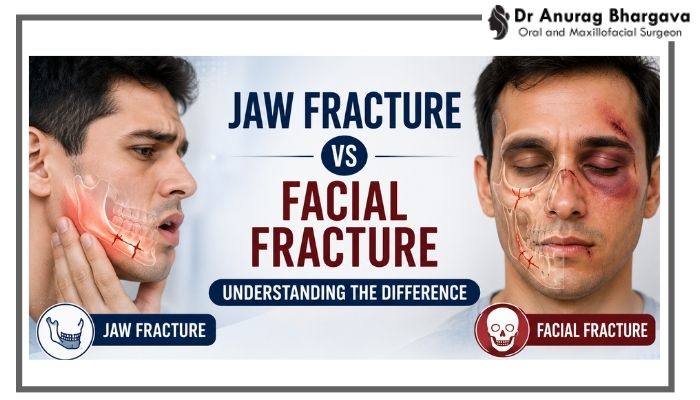
A jaw fracture is a type of injury involving the jawbone, while a facial fracture is a broader term that can involve different bones of the face, including the jaw, nose, cheekbones, eye socket, and other facial structures.
Understanding the difference is important because facial injuries can affect much more than appearance. Depending on the injury, they may affect chewing, speaking, breathing, vision, and the way your teeth come together.
Let's understand the difference between a Jaw Fracture and a Facial Fracture, their symptoms, causes, treatment options, and when you should seek medical help.
What Is a Jaw Fracture?
A Jaw Fracture occurs when one of the jawbones breaks or cracks due to trauma.
The jaw plays an important role in several everyday functions, including:
- Chewing
- Speaking
- Opening and closing the mouth
- Maintaining proper bite alignment
The lower jaw, also called the mandible, is commonly affected by direct trauma. A fracture may occur after a road accident, fall, sports injury, physical assault, or another strong impact.
Depending on the severity, the jawbone may have a small crack or the bone may move out of its normal position.
Common Symptoms of a Jaw Fracture
A jaw injury can cause several noticeable symptoms.
Common Jaw Fracture symptoms may include:
- Pain in the jaw
- Swelling
- Difficulty opening or closing the mouth
- Pain while chewing
- Difficulty speaking
- A change in the way the upper and lower teeth meet
- Loose or damaged teeth
- Bleeding inside the mouth
- Numbness around the lower face
- Visible changes in jaw shape
One particularly important sign is a sudden change in your bite. If your teeth no longer fit together the way they did before the injury, it could indicate a significant jaw injury.
What Is a Facial Fracture?
A Facial Fracture is a broader term used to describe a break or injury involving one or more bones of the face.
The face contains several bones and structures that can be affected during trauma.
A facial fracture may involve the:
- Jaw
- Nose
- Cheekbone
- Eye socket
- Upper jaw
- Forehead or other facial bones
Because of this, a person can have a facial fracture without having a jaw fracture.
However, a jaw fracture can also be considered part of a broader facial injury.
Common Types of Facial Fractures
Facial fractures can occur in different parts of the face depending on the location and force of the impact.
Nasal Fracture
A broken nose may cause:
- Nosebleeding
- Swelling
- Pain
- Difficulty breathing through the nose
- A visible change in the shape of the nose
Cheekbone Fracture
An injury to the cheekbone may lead to:
- Swelling
- Bruising
- Facial asymmetry
- Pain while opening the mouth
- Numbness in the cheek area
Orbital or Eye Socket Fracture
A fracture around the eye can sometimes affect normal eye function.
Symptoms may include:
- Double vision
- Blurred vision
- Difficulty moving the eye
- Swelling around the eye
- Changes in the appearance or position of the eye
Upper Jaw Fracture
A strong impact can also affect the upper jaw and surrounding facial structures.
This may cause:
- Difficulty biting
- Facial swelling
- Changes in facial structure
- Loose teeth
- Problems with jaw alignment
Jaw Fracture vs Facial Fracture: The Main Difference
The easiest way to understand the difference is this:
A jaw fracture affects the jawbone, while a facial fracture can affect any of several bones in the face.
|
Feature |
Jaw Fracture |
Facial Fracture |
|
Area affected |
Primarily the upper or lower jaw |
One or more facial bones |
|
Common symptoms |
Bite changes, jaw pain, difficulty chewing |
Swelling, bruising, deformity, vision or breathing issues |
|
May affect chewing |
Frequently |
Depending on the fracture location |
|
May affect vision |
Usually not directly |
Possible with eye socket injuries |
| Treatment | Observation, stabilization, or surgery |
Depends on the specific facial bone involved |
Both injuries require proper evaluation because the visible appearance of an injury does not always reveal its full severity.
What Causes Jaw and Facial Fractures?
Both Jaw Fracture and Facial Fracture injuries are commonly caused by trauma.
Some common causes include:
Road Traffic Accidents
Car, motorcycle, and other road accidents can involve high-impact injuries to the face and jaw.
Falls
A fall onto the face or chin can result in fractures, particularly in older adults or after a significant impact.
Sports Injuries
Contact sports can increase the risk of facial and jaw injuries.
Physical Assault
A direct blow to the face or jaw can cause fractures.
Workplace Accidents
Heavy objects, machinery, or falls can cause significant facial trauma.
The severity of the fracture often depends on the amount and direction of force involved.
Can You Have Both a Jaw Fracture and Facial Fracture?
Yes. A major accident can affect multiple bones at the same time.
For example, someone involved in a serious accident may experience injuries to the jaw, cheekbone, nose, and other facial structures.
This is why a detailed examination is important after significant facial trauma.
A person may initially focus on jaw pain while another injury remains unnoticed because swelling or bruising is masking the symptoms.
How Are Jaw and Facial Fractures Diagnosed?
Diagnosis usually begins with a detailed clinical examination.
The doctor or surgeon may check:
- Facial symmetry
- Areas of swelling and tenderness
- Jaw movement
- Bite alignment
- Teeth
- Facial sensation
- Eye movement
- Breathing
- Visible wounds
Imaging may also be required to identify the location and severity of a fracture.
Depending on the injury, X-rays or advanced imaging may be used to understand the condition of the bones and surrounding structures.
Does Every Jaw or Facial Fracture Need Surgery?
No. Not every Jaw Fracture or Facial Fracture requires surgery.
Treatment depends on several factors, including:
- Location of the fracture
- Whether the bone has moved out of position
- Severity of the injury
- Bite alignment
- Ability to chew or open the mouth
- Effect on breathing or vision
- Presence of other injuries
Some minor and stable fractures may be managed conservatively.
More serious or displaced fractures may require the bones to be repositioned and stabilized.
How Are Jaw Fractures Treated?
Treatment for a jaw fracture depends on the severity and location of the injury.
In some cases, the jaw may need to be stabilized while the bone heals.
For more complex fractures, surgery may be required to reposition the bone and hold it in the correct position.
Recovery may also involve dietary changes.
Patients may be advised to consume soft or liquid foods while the jaw heals because chewing can place pressure on the injured bone.
Follow-up visits are important to ensure proper healing and bite alignment.
How Are Facial Fractures Treated?
Treatment for a Facial Fracture depends entirely on the bone involved.
Some fractures may only require observation and supportive care.
Others may require treatment to restore:
- Facial structure
- Jaw function
- Normal bite
- Breathing
- Eye movement
More complex facial injuries may require surgical treatment to carefully reposition the fractured bones.
The treatment plan should always be based on an individual assessment rather than the appearance of swelling alone.
When Should You See a Surgeon?
You should seek medical evaluation after significant facial trauma, especially if you experience:
- Difficulty breathing
- Severe facial pain
- Double or blurred vision
- Difficulty opening your mouth
- A change in your bite
- Persistent numbness
- Heavy bleeding
- Visible facial deformity
- Loose or damaged teeth
- Significant swelling after an impact
Some facial injuries need urgent attention because delays may affect function or complicate treatment.
If there are signs of a serious injury or emergency symptoms, immediate medical care should be sought.
What Happens During Recovery?
Recovery varies depending on the type of fracture and treatment required.
During recovery, patients may experience:
- Swelling
- Bruising
- Pain
- Restricted movement
- Temporary dietary restrictions
The healing period also depends on whether the injury was treated conservatively or surgically.
It is important to follow all instructions regarding:
- Medication
- Diet
- Oral hygiene
- Physical activity
- Follow-up appointments
Trying to return to normal activities too quickly can interfere with recovery.
Can Facial Fractures Cause Long-Term Problems?
They can, particularly if a significant injury is not properly evaluated or treated.
Depending on the affected area, complications may involve:
- Changes in facial appearance
- Bite problems
- Difficulty chewing
- Persistent numbness
- Jaw movement issues
- Breathing problems
- Vision-related concerns
This doesn't mean every facial injury leads to long-term problems. The point is that proper assessment is important, especially after significant trauma.
Final Thoughts
The difference between a Jaw Fracture and a Facial Fracture mainly comes down to the area affected.
A jaw fracture specifically involves the jawbone and can significantly affect chewing, speaking, and bite alignment. A facial fracture is a broader term that can involve the jaw, nose, cheekbones, eye sockets, or other bones of the face.
After an accident or strong impact, don't assume that swelling and pain will always resolve on their own.
Changes in your bite, difficulty opening the mouth, vision problems, numbness, breathing difficulty, or visible facial deformity should always be taken seriously.
The right evaluation can identify the extent of the injury and help determine the most appropriate treatment.
Frequently Asked Questions
1. What is the difference between a jaw fracture and a facial fracture?
A jaw fracture specifically involves the jawbone, while a facial fracture is a broader term covering fractures of the jaw, nose, cheekbones, eye socket, or other facial bones.
2. How do I know if I have a jaw fracture?
Common signs include jaw pain, swelling, difficulty opening the mouth, pain while chewing, loose teeth, numbness, and changes in how your teeth fit together.
3. Can a jaw fracture heal without surgery?
Some stable jaw fractures may be managed without surgery, while displaced or complex fractures may require repositioning and stabilization by a specialist.
4. What are common symptoms of a facial fracture?
Symptoms can include swelling, bruising, facial pain, numbness, visible deformity, bite changes, breathing problems, or vision changes depending on the affected facial bone.
5. Can a facial fracture affect vision?
Yes. A facial fracture involving the eye socket may cause blurred vision, double vision, swelling around the eye, or difficulty moving the eye.
6. Is a jaw fracture considered a facial fracture?
Yes. The jaw is part of the facial structure, so a jaw fracture can be considered a type of facial fracture.
7. How long does it take for a jaw fracture to heal?
Healing time varies depending on fracture severity, location, and treatment. Your surgeon can provide a more accurate timeline based on your specific injury.
8. What should I do immediately after a facial injury?
Seek medical evaluation after significant trauma, especially if you have severe pain, bleeding, breathing difficulty, bite changes, numbness, vision problems, or facial deformity.
9. Which surgeon treats jaw and facial fractures?
Oral and maxillofacial surgeons commonly treat injuries involving the jaws, facial bones, mouth, teeth, and related facial structures.
10. Can facial fractures cause permanent problems?
Some untreated or severe fractures may lead to functional or appearance-related problems. Early evaluation and appropriate treatment can help reduce these risks.
About the Author
Dr. Anurag Bhargava is a qualified cosmetic and reconstructive surgeon specializing in facial deformity correction, rhinoplasty, jaw surgery, cleft lip and palate repair, and post-traumatic facial reconstruction. Dr. Bhargava is committed to delivering safe, evidence-based, and natural-looking results for patients of all ages.
BDS, MDS (Oral & Maxillofacial Surgery), FICOI (USA), Diplomate – WCOI (Japan)