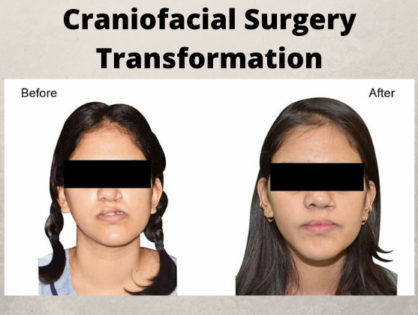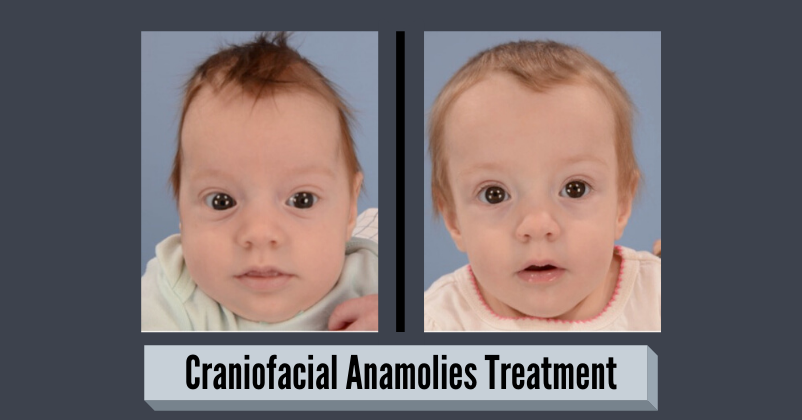
Before going for craniofacial surgery, it is is essential to know about the type of syndrome that resulted in deformity or anomaly. In this article, we will learn about the various carniofacial anomalies symptoms, its diagnosis and treatment options. So, let's quickly start.
The skulls of babies include plates of bone, which are separated through soft areas called sutures. During the initial 6 months to 1.5 years of age, the sutures fuses and the skull develops into one piece.
Craniofacial anomalies, involving craniosynostosis, is because of an infant’s skull or facial bones combining together very early or abnormally.
When the bones combine very early, the brain can malfunction as it develops and cannot expand correctly, and the infant may experience neurological issues.
Surgery is essential to correct the contours of the skull and face and provide space for the infant’s growing brain.
Craniofacial Anomalies Symptoms
The craniofacial anomalies can be mild or critical depending on what parts of the baby’s skull have got affected. Particular types of symptoms are called as syndromes and there are many that lead to telltale facial deformities:
- Apert Syndrome: It is a genetic deformity identified by irregularities in head shape and size and joined fingers and toes.
- Craniosynostosis: It is a disorder in which the bones in a baby’s skull join together very early, resulting in a condition where the brain grows in ways that involves abnormal head shape or facial characteristics. Mostly, the non-syndromic craniosynostosis occurs, that means they are not coupled with other abnormalities in the body. Syndromic craniosynostosis happens less often and is coupled with different birth deformities.
- Crouzon Syndrome: It shows anomalies in the face, skull and heart. It is a hereditary syndrome which is because of a mutation on the FGFR2 or FGFR3 gene.
- Deformational plagiocephaly: It involves irregular head shape where bones in the skull are uncommonly shaped by outside forces.
- Facial Paralysis: It is the inability in moving a part or the complete face. It can be for either sides or both the sides of the face. This can cause asymmetry and can result in both social interaction and functional issues.
- Facial Trauma: It shows any irregularity caused to the face that could permanently modify the shape of facial characteristics and working of the mouth, ears, nose or eyes.
- Hemifacial Microsomia: It is a birth deformity that leads to abnormalities of the soft tissue or mouth’s bone, lower and/ or upper jaws and ears that can sustain into childhood.
- Hypertelorbitism: It is termed as orbital hypertelorism which is an uncommonly increased distance between the orbits that is the bony sockets surrounding the eyes.
- Jaw Abnormalities: It is the deformities in the way the jaw grows or works, can happen due to disease or trauma.
Diagnosis of Craniofacial Anomalies
Some of these deformities are by birth, and others happen till a child’s head develops for the starting few months. Mostly, your maxillofacial surgeon can detect a craniofacial deformity through test only. Analyzing the baby’s skull, brain and facial structure through a CT scan or MRI can provide a confirmation for the diagnosis.
Treatment for Craniofacial Anomalies
1. Craniofacial Surgery
Regarding craniosynostosis and other anomalies, you maxillofacial surgeon can suggest craniofacial surgery for treating the physical structure of the skull and facial bones and improve your child's functionality.
These types of surgeries are perplexed and intensive, that requires eliminating, reshaping and replacing some parts of the skull. Pediatric neurosurgeons may coordinate with craniofacial maxillofacial surgeons like Dr. Anurag Bhargava to give the best treatment.
Skull reconstruction may sometimes require the surgeons to use wires, small screws, sutures or plates to balance the bone and defend the brain as your baby grows.
2. Minimally Invasive Surgery
In particular cases, if your baby’s abnormality is detected before he turns three months old, the surgeon may be in a position to utilize one of the many minimally invasive procedures. These endoscopic methods can reduce the chances of blood transfusions and other complications when compared with surgeries and can also result in the speedy recovery of your child.
For any of the conditions, quick decision for treatment by maxillofacial surgeon is essential as the babies’ brain develop faster and it helps as all the treatment options are available at an early age.
Impact on Child’s Development
Neurological Development
Untreated craniofacial anomalies can have a significant effect on a child’s brain development. When the skull bones fuse too early, the growing brain does not get enough space to expand naturally. This can lead to increased intracranial pressure, delayed developmental milestones, learning difficulties, and, in severe cases, neurological complications such as seizures or visual impairment. Timely diagnosis and surgical intervention ensure that the brain has enough room to grow properly, preventing long-term cognitive and developmental delays.
Speech & Hearing Issues
Craniofacial anomalies often impact the ears, palate, or jaw, which may lead to hearing loss and speech problems. Children might experience difficulty in pronouncing words clearly or suffer from frequent ear infections due to fluid buildup. Early involvement of an audiologist and speech-language therapist is crucial to minimize these challenges. Post-treatment speech therapy can significantly improve communication skills, allowing the child to integrate better socially and academically.
Emotional & Social Impact
Beyond the physical concerns, craniofacial anomalies can deeply affect a child’s emotional well-being. Children with visible facial differences may face bullying, social stigma, or feelings of isolation. This can result in low self-esteem, anxiety, and difficulty forming friendships. Offering psychological counseling, building a supportive environment at home, and connecting with peer support groups can help children and their families cope emotionally and build confidence.
Post-Surgery Care & Recovery
Hospital Stay & Monitoring
After craniofacial surgery, children usually stay in the hospital for 3–7 days, depending on the complexity of the procedure. During this period, they are closely monitored for signs of infection, bleeding, or swelling. Parents are guided on how to care for surgical wounds and watch for any warning signs once they are discharged.
Pain Management & Healing Timeline
Post-operative pain is normal but manageable with prescribed medications. Parents can expect some swelling and bruising, which typically improves within 1–2 weeks. Most children can return to light activities after a few weeks, but full healing may take several months as the skull bones stabilize. Regular follow-up appointments help track the child’s recovery and ensure proper skull growth.
Physical & Occupational Therapy
Rehabilitation plays a key role in a child’s long-term recovery. Physical therapy may be recommended to help improve neck strength, head movement, and posture. Occupational therapy can support fine motor skills, daily activities, and cognitive development, especially if there were neurological effects before surgery. Together, these therapies help the child regain function, confidence, and independence.